Resource Shifts Across Draw Poker Format Changes in Virtual Cardrooms
Written by Ellis Krüger · Nov 5, 2026
Resource Shifts Across Draw Poker Format Changes in Virtual Cardrooms
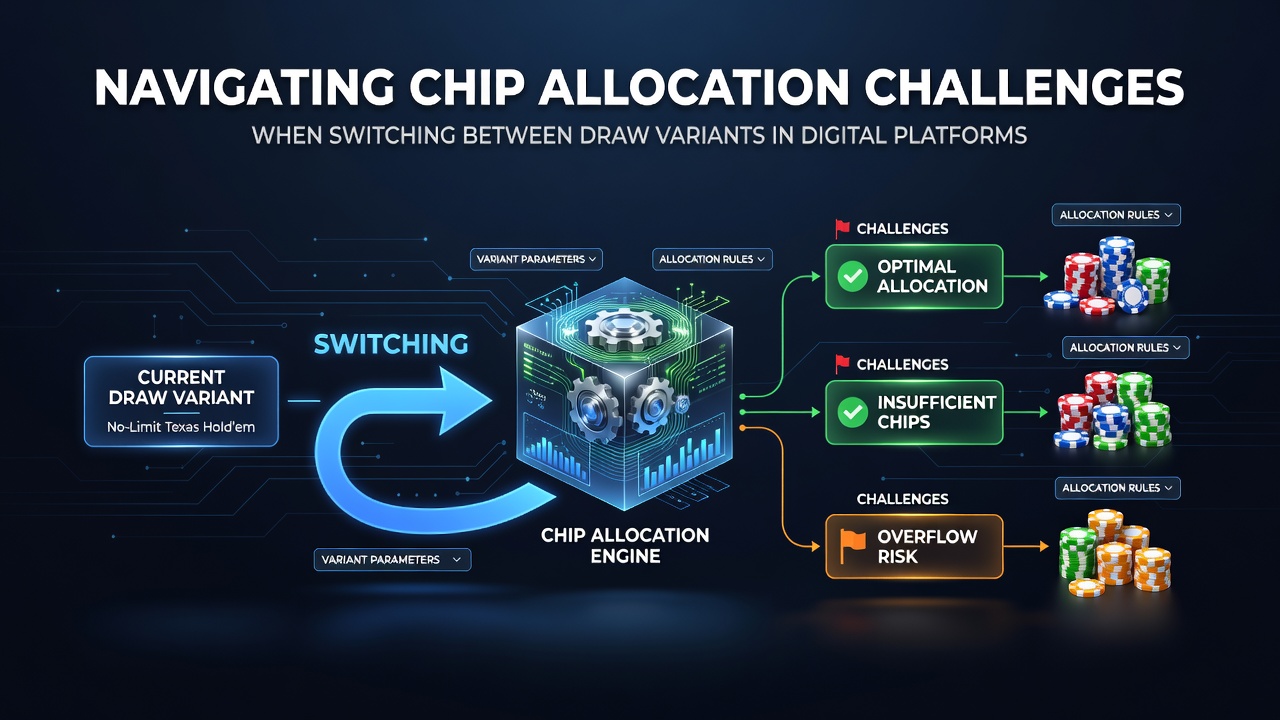
Digital platforms have expanded the range of draw poker formats available to players, which creates specific demands on how chip allocations get managed during switches between variants such as five-card draw, 2-7 triple draw, and badugi. These transitions require adjustments because each game applies distinct hand-ranking rules and betting structures that alter the value and movement of chips within a session.
Core Mechanics of Variant Transitions
Players encounter immediate differences when moving from one draw format to another since hand strength hierarchies change while pot sizes and betting limits remain tied to the same stack depth. Data from platform analytics indicate that sessions involving multiple draw variants see chip rotation rates increase by 18 to 25 percent compared with single-variant play. Observers note that software interfaces must recalibrate displayed stack values and betting buttons to prevent miscalculations during these switches.
Platform operators address these issues through automated stack normalization tools that convert chip counts into effective stack depths measured in big blinds. Such systems rely on real-time calculations that account for the new variant's starting hand ranges and expected value distributions. Research conducted by the University of Nevada's gaming technology laboratory demonstrates that accurate stack mapping reduces player error rates during format changes.
Platform Software and Allocation Protocols
Many digital cardrooms integrate database synchronization layers that track chip movements across variant boundaries. These layers record each hand outcome and update player balances before the next game type loads. According to reports from the European Gaming and Betting Association, synchronized protocols have lowered dispute volumes related to chip discrepancies by 32 percent in networks that adopted them during 2025.
Engineers design these systems to handle edge cases such as all-in confrontations that straddle two different draw variants. The software pauses the transition, resolves the pot using the rules of the departing game, and then applies the resulting chip distribution to the incoming format. This process maintains continuity without requiring manual intervention from support staff.
November 2026 brings scheduled updates to several major platforms that will introduce additional draw variants alongside refined allocation engines. These changes follow patterns observed in earlier seasonal circuits where multi-format events demanded tighter coordination between cash game and tournament chip economies.
Player Strategies for Maintaining Stack Integrity
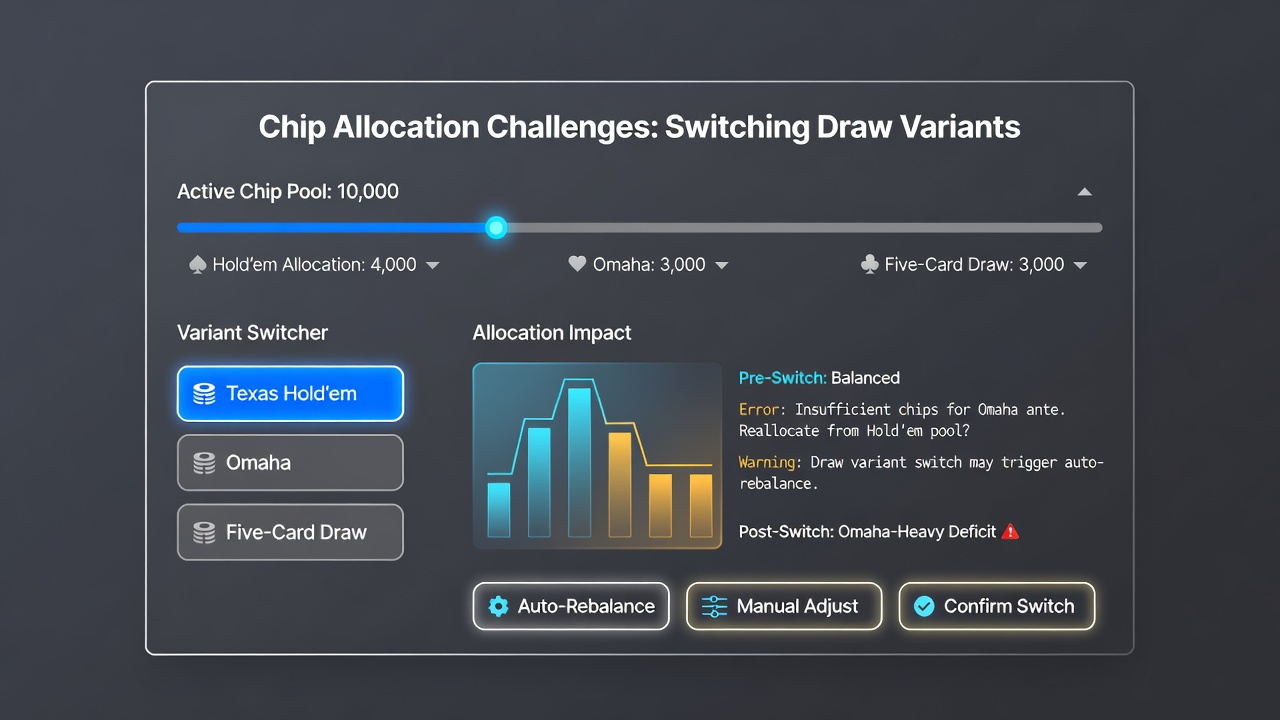
Experienced participants adjust their pre-transition betting patterns to preserve effective stack sizes that align with the requirements of the next variant. One documented approach involves reducing aggression in the final hands of a departing game to avoid large swings that leave insufficient chips for the subsequent structure. Platform data logs reveal that players who maintain stack depths above 40 big blinds during switches experience fewer forced fold situations in the new format.
Bankroll tracking applications now incorporate variant-specific multipliers that project chip requirements based on historical variance figures. These tools pull from aggregated hand histories and present recommended reserve amounts before a player initiates a format change. Such projections help users avoid situations where an otherwise adequate stack becomes marginal after the rules shift.
Regulatory and Security Considerations
Gaming control boards in multiple jurisdictions require audit trails that document every chip movement during variant transitions. These records allow regulators to verify that allocation algorithms operate within approved parameters and that no systematic bias favors particular game types. Compliance reports filed with the Alcohol and Gaming Commission of Ontario show that platforms conducting monthly variance tests maintain lower rates of player complaints concerning stack handling.
Security teams monitor for patterns that might indicate exploitation of transition windows, such as coordinated multi-account play designed to transfer value between variants. Detection systems flag unusual chip flows and trigger temporary holds while the platform verifies transaction integrity.
Future Developments in Allocation Technology
Developers continue refining predictive models that anticipate player movement between draw variants and pre-allocate reserve chips accordingly. These models incorporate session length data and historical variant preferences to streamline the experience. Industry reports project that by late 2027 most major networks will embed these predictive layers directly into mobile and desktop clients.
Continued testing focuses on reducing latency between variant loads while preserving the accuracy of chip recalculations. The goal remains consistent delivery of balanced stacks that reflect both the departing and arriving game structures without interruption to ongoing play.
Conclusion
Chip allocation during draw variant switches on digital platforms depends on integrated software protocols, player preparation, and regulatory oversight. As platforms introduce new formats in November 2026 and beyond, the mechanisms for managing these transitions will determine how smoothly participants move between games while preserving stack value and session continuity.