Strategic Use of Hand History Analytics in Selecting Global Tournament Entry Points
Written by Otto Neumann · Sep 24, 2026
Strategic Use of Hand History Analytics in Selecting Global Tournament Entry Points
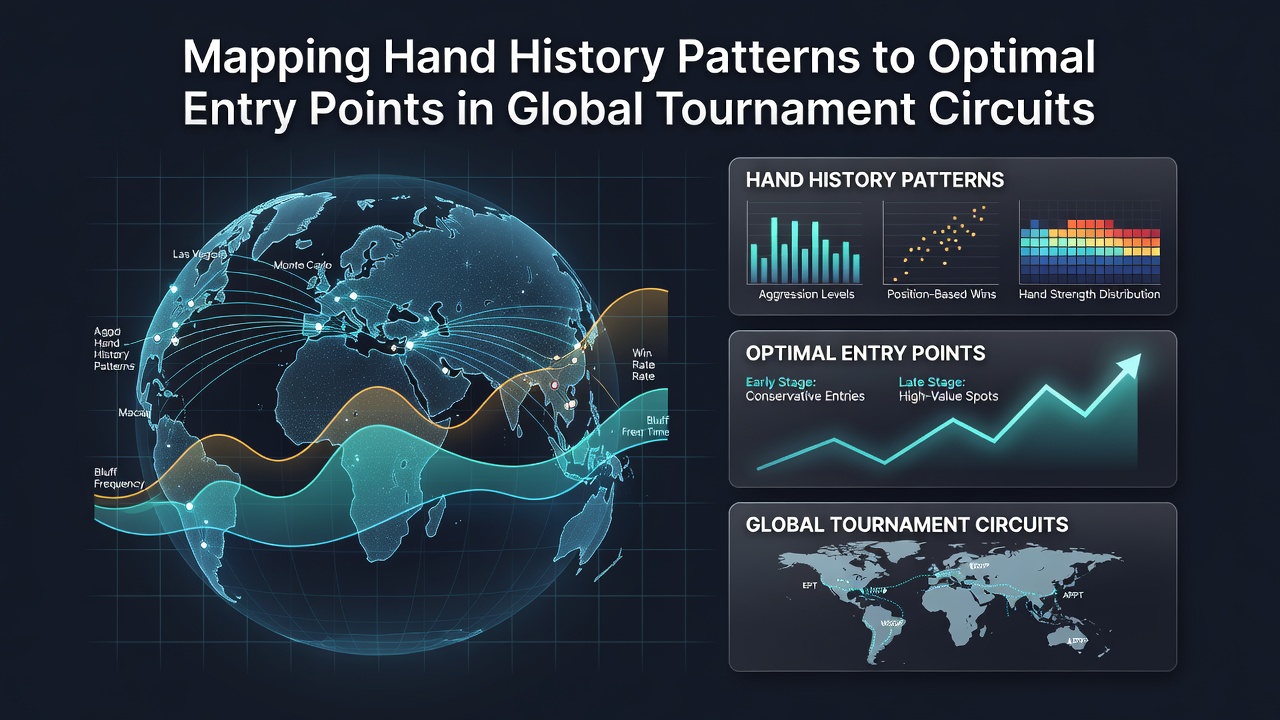
Hand history databases compile millions of recorded poker hands from cash games and tournaments worldwide, and analysts map recurring patterns such as preflop raise frequencies, continuation bet success rates, and river calling ranges to identify moments when entry into scheduled events aligns with favorable conditions, while observers note that September 2026 circuits including stops in Las Vegas and Barcelona feature expanded fields where these mappings prove especially relevant for timing decisions.
Global tournament circuits operate on seasonal calendars that rotate through North America, Europe, Asia, and Australia, and data from these events shows that players who review hand histories against historical field size trends and payout structures often adjust their entry windows to periods when average stack depths and blind levels create measurable edges, yet the process requires integration of multiple variables including player pool composition and recent variant rotations.
Core Components of Hand History Pattern Analysis
Pattern analysis begins with aggregation of individual hand records into larger datasets that track metrics across thousands of iterations, and researchers at institutions such as the University of Nevada, Las Vegas have documented how frequency distributions in three-bet pots correlate with specific tournament stages, while software platforms process these records to flag entry opportunities where historical aggression levels drop below established thresholds, and this approach connects directly to circuits where field sizes expand rapidly in early registration periods.
Optimal entry points emerge when historical data indicates reduced variance in early levels combined with higher average player skill gaps, and tournament organizers publish starting times and structures that allow cross-referencing against past performance logs, but the mapping also accounts for regional differences such as European stops emphasizing shorter day structures compared with extended North American sessions.
Integration Across International Tournament Schedules
September 2026 features overlapping circuits that include WSOP Circuit events alongside EPT stops, and figures from the Nevada Gaming Control Board reveal consistent growth in registered participants during shoulder months, which creates windows where hand history patterns tied to multi-table survival rates become predictive for entry selection, and analysts cross-reference these statistics with draw sequence impacts documented in multi-format festivals.
Entry timing further incorporates adjustments for satellite qualifiers feeding into main events, and data indicates that players who monitor hand history trends in satellite fields achieve higher conversion rates when transitioning to primary tournaments, while regulatory reports from the New Jersey Division of Gaming Enforcement track similar participation spikes that align with pattern-based planning.

Technical Tools and Database Synchronization
Modern platforms synchronize hand history exports with live tournament calendars through API connections that update entry availability in real time, and industry reports from the Australian Communications and Media Authority document adoption rates of such systems among professional circuits, while pattern recognition algorithms highlight correlations between specific hand outcomes and subsequent optimal registration moments across time zones.
Those who study these systems observe that mobile applications now embed filtered history views that flag entry points based on user-defined parameters such as stack-to-blind ratios drawn from prior events, and this integration reduces manual cross-checking while maintaining compliance with data protocols established in hybrid cash and tournament environments.
Regional Variations and Data Sources
North American circuits emphasize larger guaranteed prize pools that reward entries timed after initial satellite phases conclude, whereas Asian stops often feature faster structures where hand history patterns around short-stack play dominate decision frameworks, and academic papers from research groups in Canada have quantified how these regional differences affect pattern reliability when mapped globally.
European events frequently incorporate re-entry options that alter historical survival curves, and analysts adjust mappings accordingly by weighting recent data more heavily than older records from single-entry formats, yet synchronization across databases ensures consistency regardless of location.
Conclusion
Mapping hand history patterns to tournament entry points relies on systematic aggregation of performance data, cross-regional calendar alignment, and ongoing synchronization between analytical tools and live registration systems, and as September 2026 circuits progress the available datasets continue to expand, allowing refined identification of timing advantages across worldwide events.